
Buyers often see "tamper-proof" in product listings. It sounds stronger, but it promises something a single-use seal cannot deliver. Understanding the difference helps you choose the right seal and, more importantly, set up a checking process that actually catches interference.
What does "tamper-evident" mean?
A tamper-evident seal is designed so that opening the closure leaves visible evidence:
- Single-use locking: once the tail, pin, cable or shackle is locked, it cannot be withdrawn and refitted. To open the closure, the seal must be cut, broken or torn.
- Unique identification: a printed or laser-marked serial number, and often a logo or barcode, makes each seal traceable. A replacement seal will not carry the recorded number.
- Visible condition: a cut cable, a torn tail, a broken body or a missing seal shows that something happened.
All the seals we supply – plastic, cable, bolt, padlock and meter seals – work this way.

Why is no security seal truly tamper-proof?
"Tamper-proof" would mean the closure cannot be opened at all. A single-use seal is meant to be removed by the receiver, so every seal has a removal method:
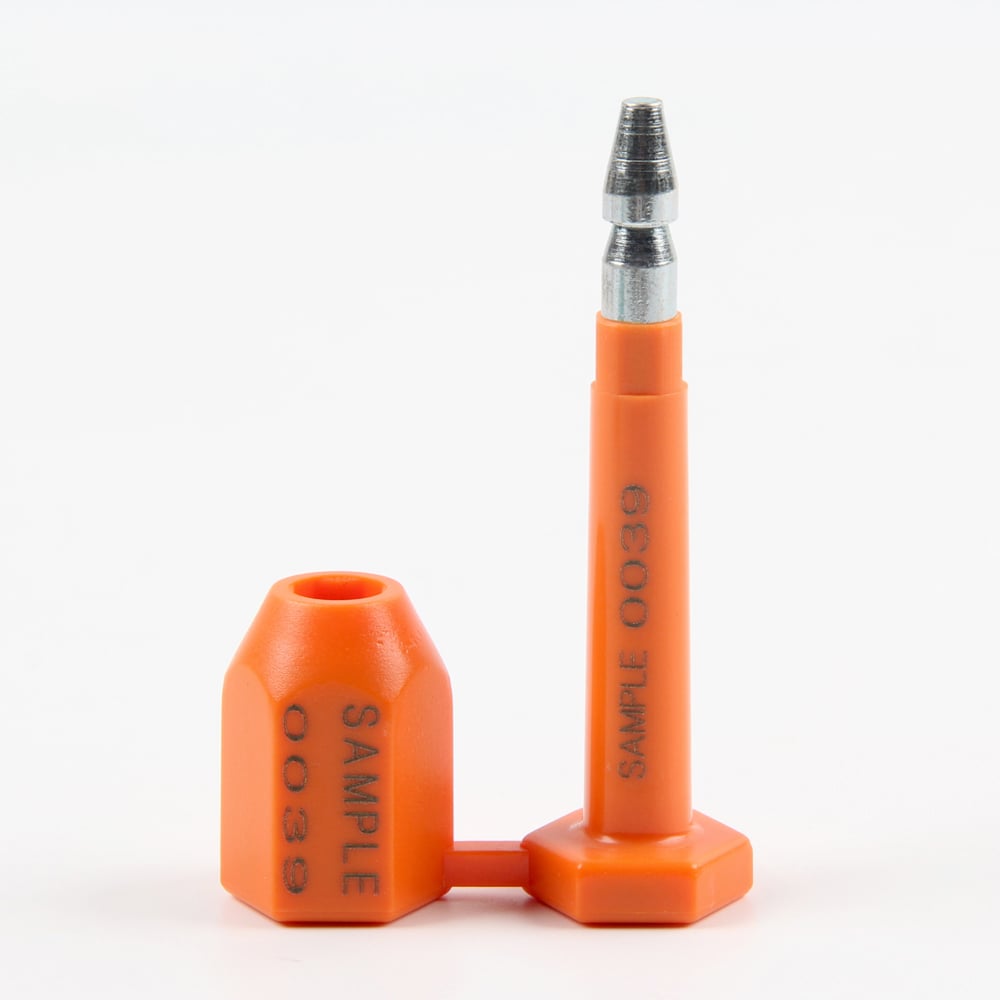
- Bolt seals are removed with a bolt cutter.
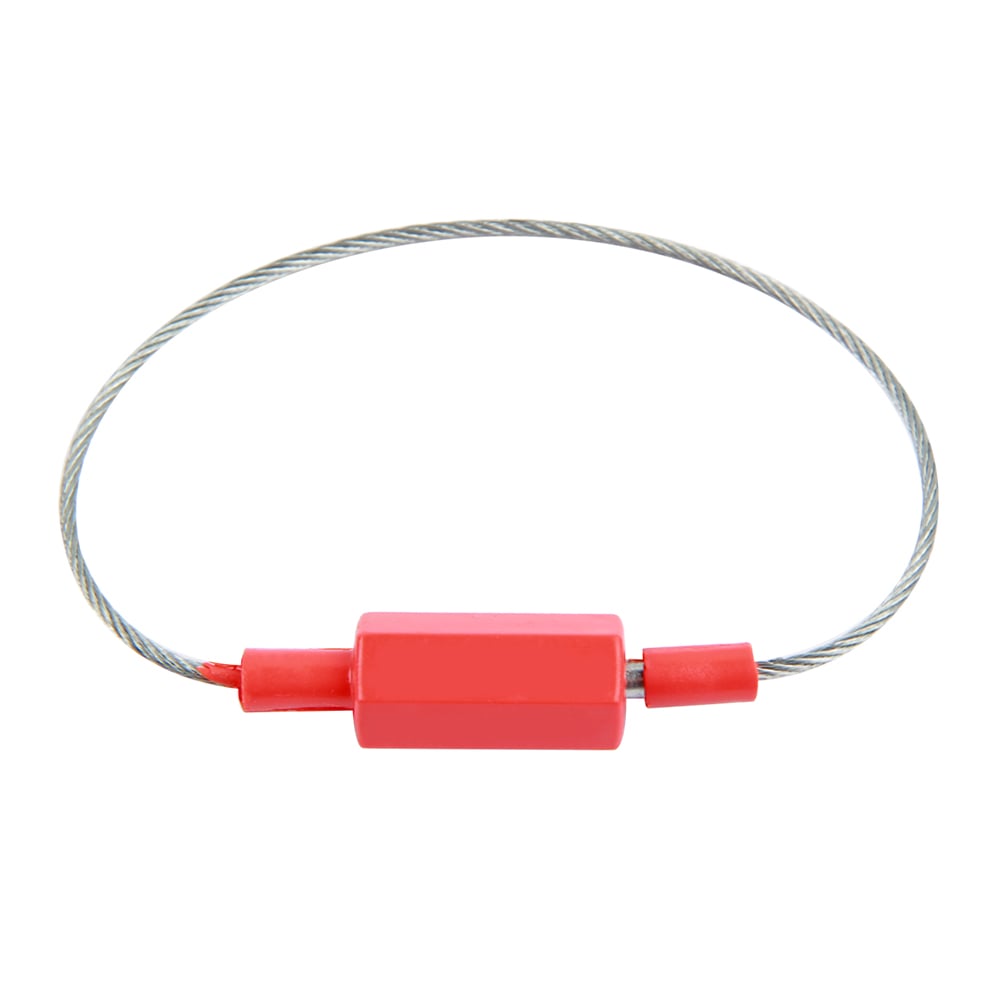
- Cable seals are removed with a cable cutter.
- Plastic seals are cut with scissors or a cutter, or opened at a hand-tear point on tear-off models.
- Meter seals are removed with cable cutters.
A heavier seal such as a bolt seal takes more effort and a specific tool to remove, which slows interference and makes it more obvious – but it is still evidence, not prevention. If a supplier describes a seal as tamper-proof, ask what exactly is being claimed and on what evidence.

Tamper-evident vs tamper-proof: comparison table
| Question | Tamper-evident seal | "Tamper-proof" claim |
|---|---|---|
| What it does | Shows that a closure was opened | Suggests the closure cannot be opened |
| Can it be removed? | Yes – cut, broken or torn with the stated method | Every single-use seal can be removed with a tool |
| How interference is detected | Missing, damaged or wrong-numbered seal at inspection | Not addressed by the claim itself |
| What makes it effective | Single-use lock, unique serial number, records and inspection | A word in a listing |
| What to ask the supplier | Locking method, removal method, marking options and model documentation | What exactly is claimed, and the supporting evidence for that model |
How does a security seal show tampering?
Different seal types leave different evidence, so match the seal to how your staff will inspect it:
- Plastic pull-tight and fixed-length seals: a cut or torn tail, or a seal whose number does not match the record. See plastic security seals.
- Cable seals: a cut cable or a damaged locking body. See cable seals.
- Bolt seals: a cut pin or a separated locking body. See bolt seals.
- Meter seals with a clear body: the wire wound inside the transparent polycarbonate body can be inspected directly. See meter seals.

Why do serial numbers matter more than strength?
A seal is only evidence if someone can tell that it is the same seal that was applied. Without a unique number, a removed seal could be replaced with an identical one. With a number recorded on the shipping document or log, a replacement shows up immediately.
- Use a unique serial number on every seal, with a prefix for your company or site.
- Add a barcode or QR code if you scan seals.
- Record the number when the seal is applied and check it at every handover.
Plastic seal flags can be laser marked, screen printed, UV printed or hot stamped; aluminum cable seal bodies are laser marked (white). See how to order custom printed security seals and our security seal numbering checklist.
How do you choose a seal that gives reliable evidence?
- Match the seal to the closure, so it can be fitted correctly every time – see bolt seal vs cable seal vs padlock seal.
- Choose the removal method on purpose: a cut-to-remove seal makes removal a deliberate step; a hand-tear seal speeds up handling where many seals are opened each day.
- Specify unique numbering and a marking that stays readable in your conditions.
- Train the people who apply and receive the seal to record and compare the number, and to report a missing, damaged or mismatched seal.
- Ask for model-specific documentation if your customer or regulator requires a tested or certified rating, rather than relying on a general claim.
For a step-by-step routine, read installing, checking and recording a seal.
Frequently asked questions
What is the difference between tamper-evident and tamper-proof?
A tamper-evident seal shows that a closure was opened – the seal is cut, broken, torn or replaced. "Tamper-proof" suggests the closure cannot be opened at all, which no single-use security seal can guarantee, because every seal has a removal method.
Are security seals tamper-proof?
No. Single-use security seals are tamper-evident. They are designed to be removed by the receiver with a cutter or at a tear point, and they show when that has happened.
Is a bolt seal more secure than a plastic seal?
A bolt seal needs a bolt cutter to remove and suits heavy doors such as containers, so it takes more effort to interfere with. It is still tamper-evident: its value comes from the single-use lock, the serial number and the record, just like a plastic seal.
Can a removed security seal be reused?
No. Once a single-use seal is locked, it can only be opened by cutting, breaking or tearing it, and it cannot be refitted.
How do I know if a seal has been tampered with?
Check that the seal is present, undamaged and correctly locked, and that its serial number matches the number recorded when it was applied. A missing, damaged or wrong-numbered seal means the closure may have been opened.
Why should every seal have a unique number?
A unique serial number proves that the seal on the closure is the one that was applied. Without it, a removed seal could be replaced with an identical blank seal and nobody would notice.
Do you provide certificates for your seals?
Documentation is model-specific. If your shipment, customer or regulator requires a certificate or a tested rating, tell us the requirement and the model so we can confirm what documentation is available before you specify it.
Need numbered tamper-evident seals?
Send your closure type, a photo, the quantity and your numbering or logo requirements through our quote form. We will recommend a seal model and confirm the marking in the quotation.
Compare seal types →