
A meter seal is a small single-use seal that closes the access points of a meter, valve or terminal cover with a thin steel wire. Once it is locked, the wire cannot be loosened without cutting it or breaking the body, so a missing, cut or damaged seal shows that someone opened the cover.
What types of meter seals are there?
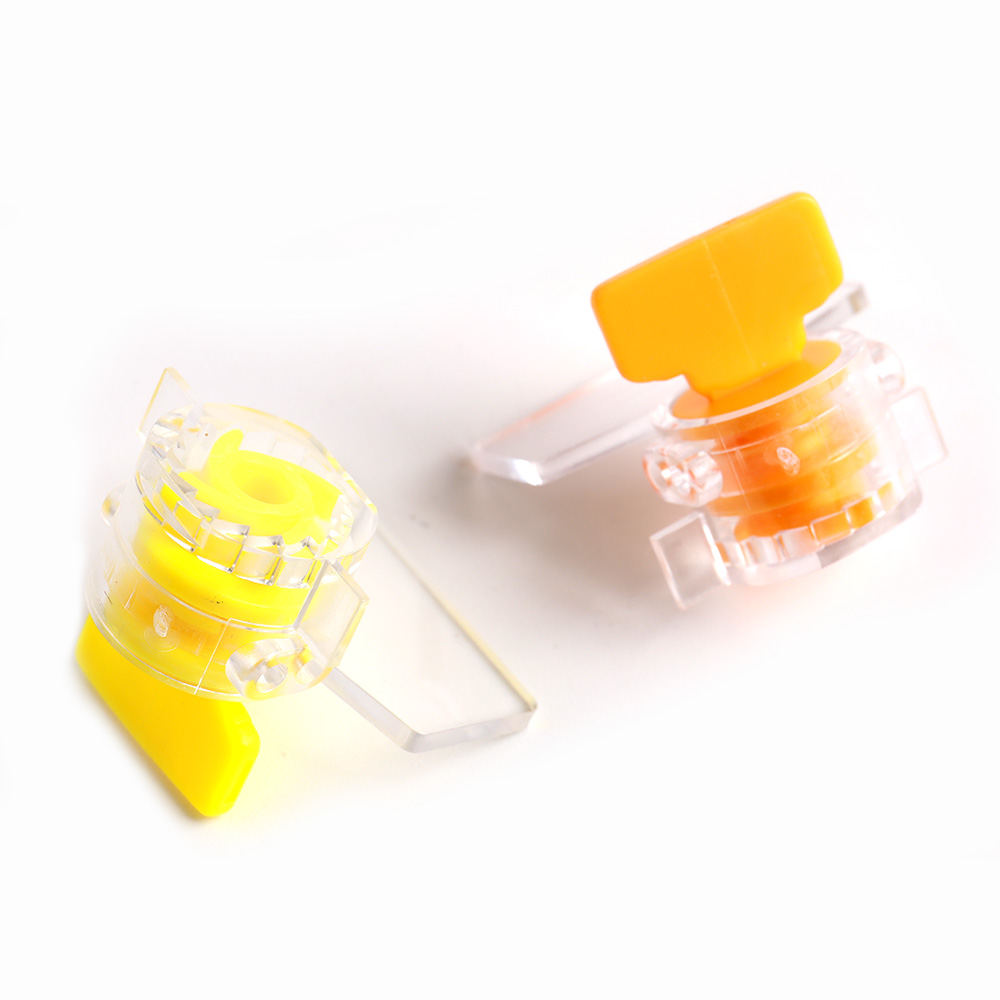
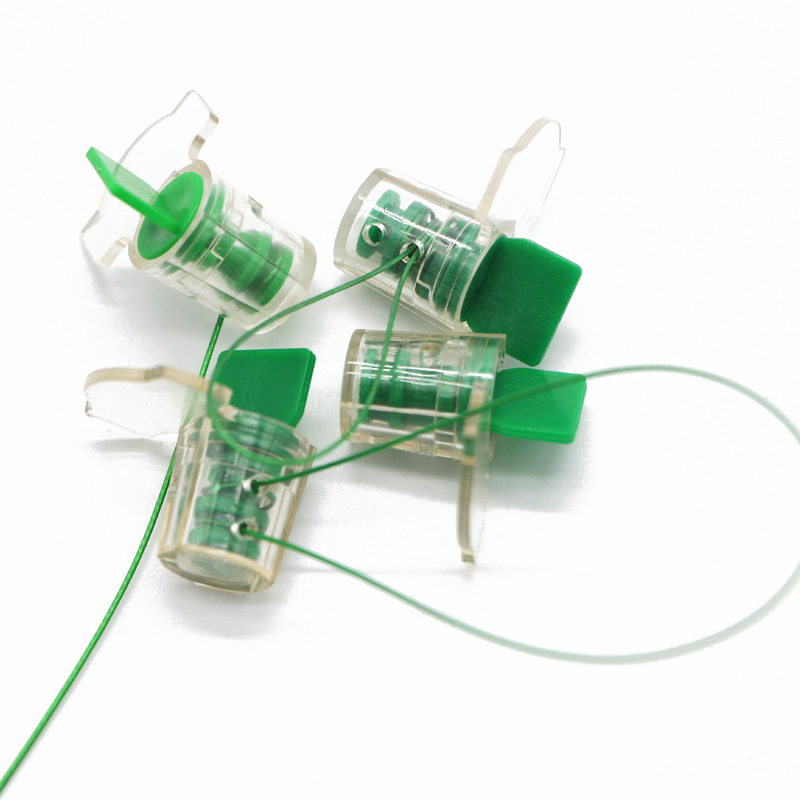
- Twist (rotary) seals: the wire passes through two holes in a clear polycarbonate body. Turning the handle winds the wire inside the rotor; the handle is then broken off so it cannot be unwound. Examples: MC-WS01, MC-WS02, MC-WS05, MC-WS07.
- Push-button seals: the wire passes through the body and pressing the top button locks it. Example: MC-WS03.
- Wire-and-body seals: the wire is captured inside a rectangular ABS body with a metal clip, leaving a large flat face for marking. Example: MC-WS08.
Twist vs push-button vs wire-and-body: comparison table
| Feature | Twist (rotary) | Push-button | Wire-and-body |
|---|---|---|---|
| How it locks | Turn the handle to the right to wind the wire, then break the handle off | Press the top button to lock the wire | Wire is captured in an ABS body with a metal clip |
| Body | Transparent polycarbonate – the wire inside can be inspected | Transparent polycarbonate with a coloured plunger | Rectangular ABS |
| Marking area | Rotor or flag; MC-WS07 has a 26 × 16 mm flag | Compact body | Large flat face for logo, serial number and barcode |
| Wire | 0.7 mm galvanized or stainless steel, 200 mm standard, custom length | 0.7 mm, 200 mm standard | 0.7 mm stainless steel, 20 cm standard, custom length |
| Removal | Cable cutters | Cable cutters | Cable cutters |
| Models and catalogue MOQ | MC-WS01 1,000; MC-WS02 2,000; MC-WS07 2,000; MC-WS05 5,000 pcs | MC-WS03 5,000 pcs | MC-WS08 5,000 pcs |
When is a twist meter seal the right choice?
Choose a twist seal when inspectors need to see the wire inside the body and installers are used to a turn-and-snap action. The clear polycarbonate body shows whether the wire is still wound, and the broken-off handle is a visible sign that the seal was properly locked.
- MC-WS01 is the lowest-MOQ option (1,000 pieces) and carries logo, serial number and laser barcode.
- MC-WS05 is the most compact body (18.72 × 22.88 mm, 22.5 mm deep) for tight spaces.
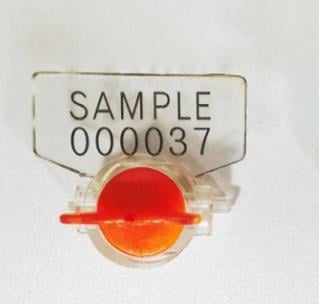
- MC-WS07 adds a 26 × 16 mm rectangular flag when you need more room for marking.

When should you use a push-button meter seal?
Choose a push-button seal when installers prefer a single press with no handle to twist and break off, for example when many seals are fitted in a shift. MC-WS03 has a clear polycarbonate body about 20.56 mm wide with a coloured button, so the locked state is easy to check.

When does a wire-and-body seal make sense?
Choose a wire-and-body seal such as MC-WS08 when the marking matters most – for example when a utility prints its name, a long serial number and a barcode on every seal. The rectangular ABS body gives a large flat face for marking. It does not have a clear body, so inspection relies on the body, wire and marking rather than seeing the wire inside.
Which wire should you choose?
All six models use 0.7 mm sealing wire.
- Galvanized or stainless steel: MC-WS01, MC-WS02, MC-WS03, MC-WS05 and MC-WS07 are offered with either; MC-WS08 uses stainless steel wire. Tell us where the meters are installed so the wire can be confirmed with the quotation.
- The standard length is 200 mm (20 cm); custom lengths are available. Wire can be supplied loose or pre-attached on several models, which saves time on site.
Can meter seals be printed with your utility name and numbers?
Yes. Meter seals can carry a company logo or name, sequential serial numbers and, depending on the model, a laser barcode. Plastic surfaces can be laser marked, screen printed, UV printed or hot stamped; the process, size and readability are confirmed on a production sample. Plan the marking with our security seal numbering checklist, or read the step-by-step guide to ordering custom printed security seals.
Quick selection guide
- Inspectors must see the wire inside → twist seal (MC-WS01, MC-WS02, MC-WS05, MC-WS07).
- Very little space around the sealing points → MC-WS05.
- More room for logo and numbers on a clear seal → MC-WS07.
- One-press installation, no handle to break → push-button MC-WS03.
- Large logo, long serial number and barcode on every seal → wire-and-body MC-WS08.
- Smallest first order → MC-WS01 (catalogue MOQ 1,000 pieces).
See all meter seals and typical uses on our electricity, water and gas meters page. For installation and record-keeping, read installing, checking and recording a seal.
Frequently asked questions
What is the difference between a twist and a push-button meter seal?
A twist seal locks when you turn the handle to wind the wire inside the body and then break the handle off. A push-button seal locks when you press the top button. Both are single-use and are removed with cable cutters.
Why do many meter seals have a transparent body?
A clear polycarbonate body lets the inspector see the wire wound inside the seal, which makes it easier to check that the seal is still intact.
What wire diameter do meter seals use?
Our meter seals use 0.7 mm wire, galvanized or stainless steel depending on the model, with a 200 mm standard length and custom lengths available.
Can a meter seal be reused?
No. Once locked, the wire can only be released by cutting it or breaking the body, and the seal cannot be refitted.
Can you print our company name, serial numbers and barcodes?
Yes, depending on the model's marking area. Logos, names, serial numbers and barcodes are confirmed on a production sample against your artwork and number format.
Which meter seal has the lowest minimum order?
MC-WS01, with a catalogue MOQ of 1,000 pieces. MC-WS02 and MC-WS07 start at 2,000 pieces; MC-WS03, MC-WS05 and MC-WS08 at 5,000 pieces.
Are meter seals certified?
Documentation is model-specific. If your utility or regulator requires a certificate or test report, tell us the requirement and the model so we can confirm what documentation is available before you specify it.
Ready to choose?
Send the meter or cover type, a photo of the sealing points, your wire preference, marking and quantity through our quote form. We will recommend a meter seal model and confirm marking options in the quotation.
Compare seal types →